Hand-drawn Notes
Photo zine postcard
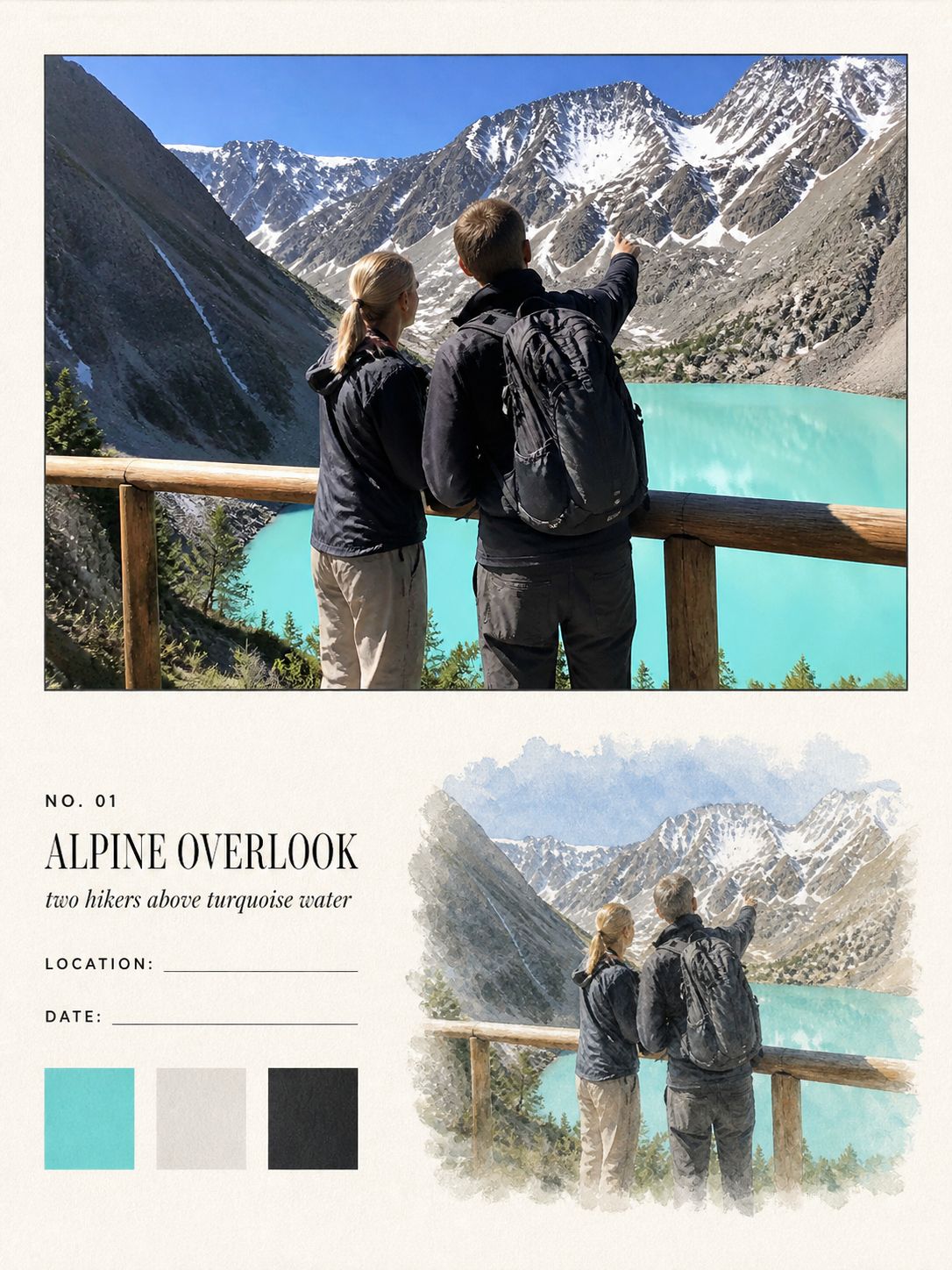
Your whole photo, one drawn motif and three small swatches
- Ratio
- Original, 3:4, 4:5, 1:1, 9:16, 4:3, 16:9 or 2.35:1
- Options
- Card face, Front caption (optional)
- Origin
- Distilled from an open-source GitHub skill · Whiplashzeb/photo-to-zine-postcard
Each generation costs credits — see your balance in My space.
Create with this styleSamples
Real generations, not mockups.
Where this style came from
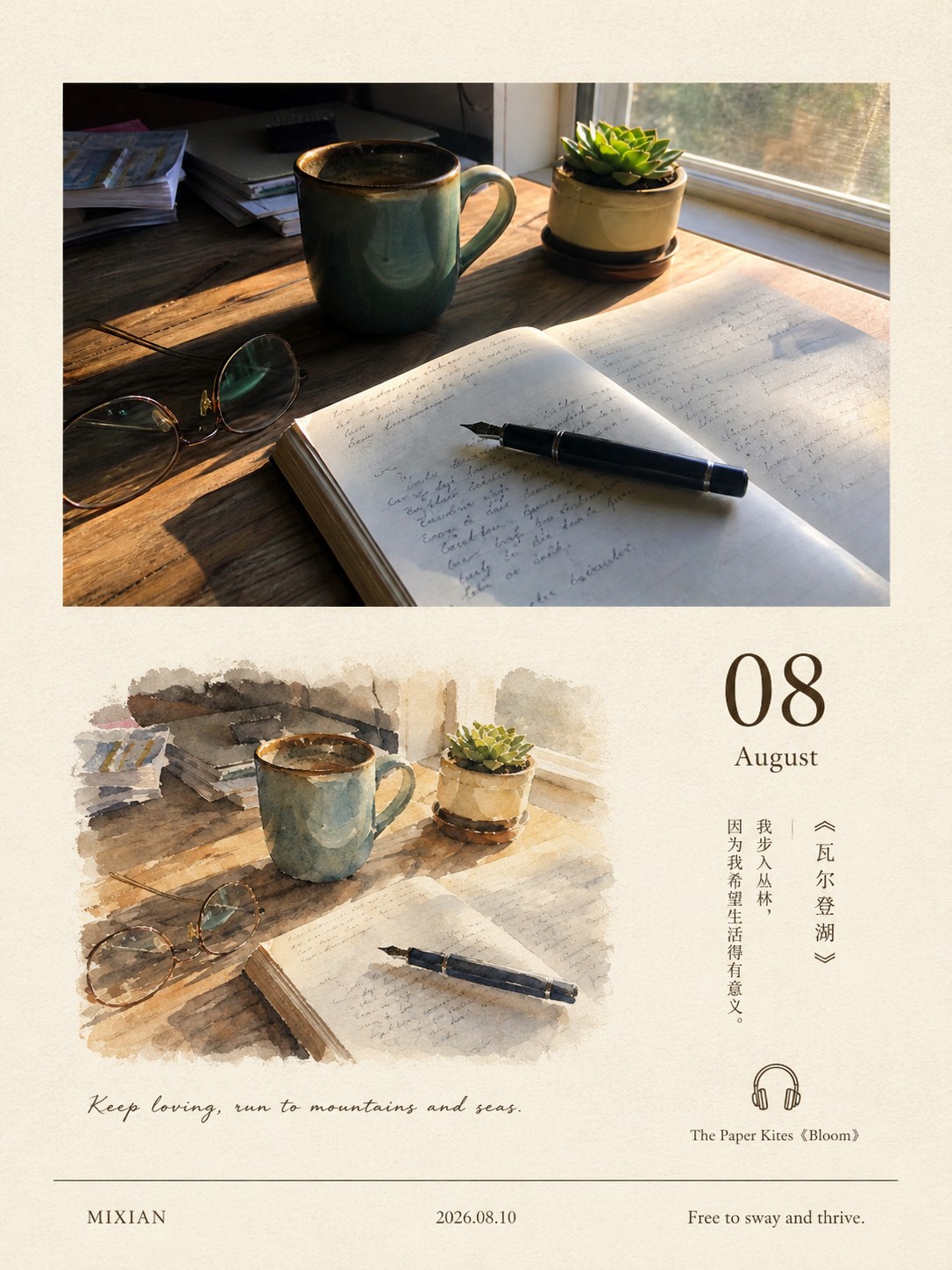
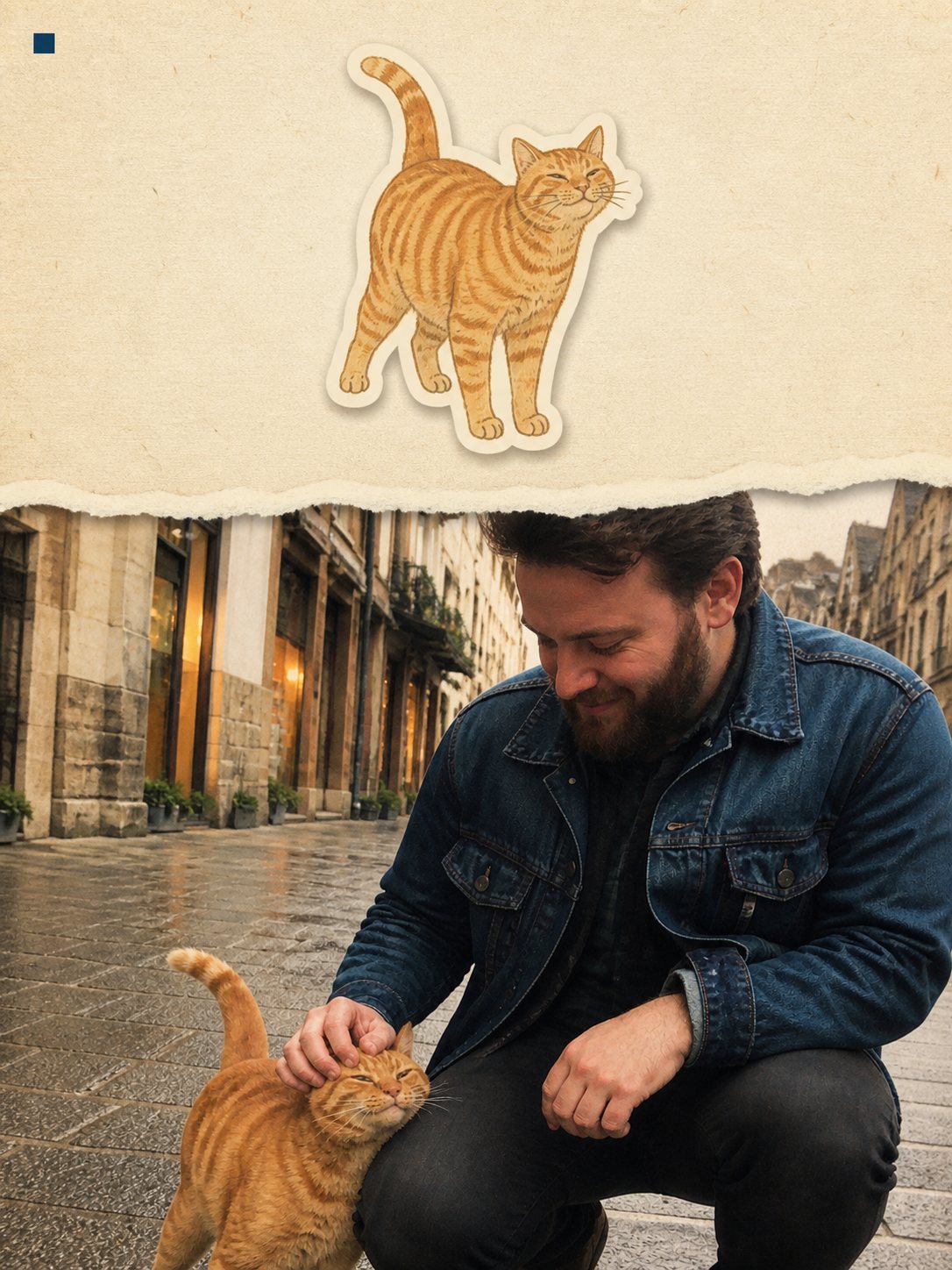
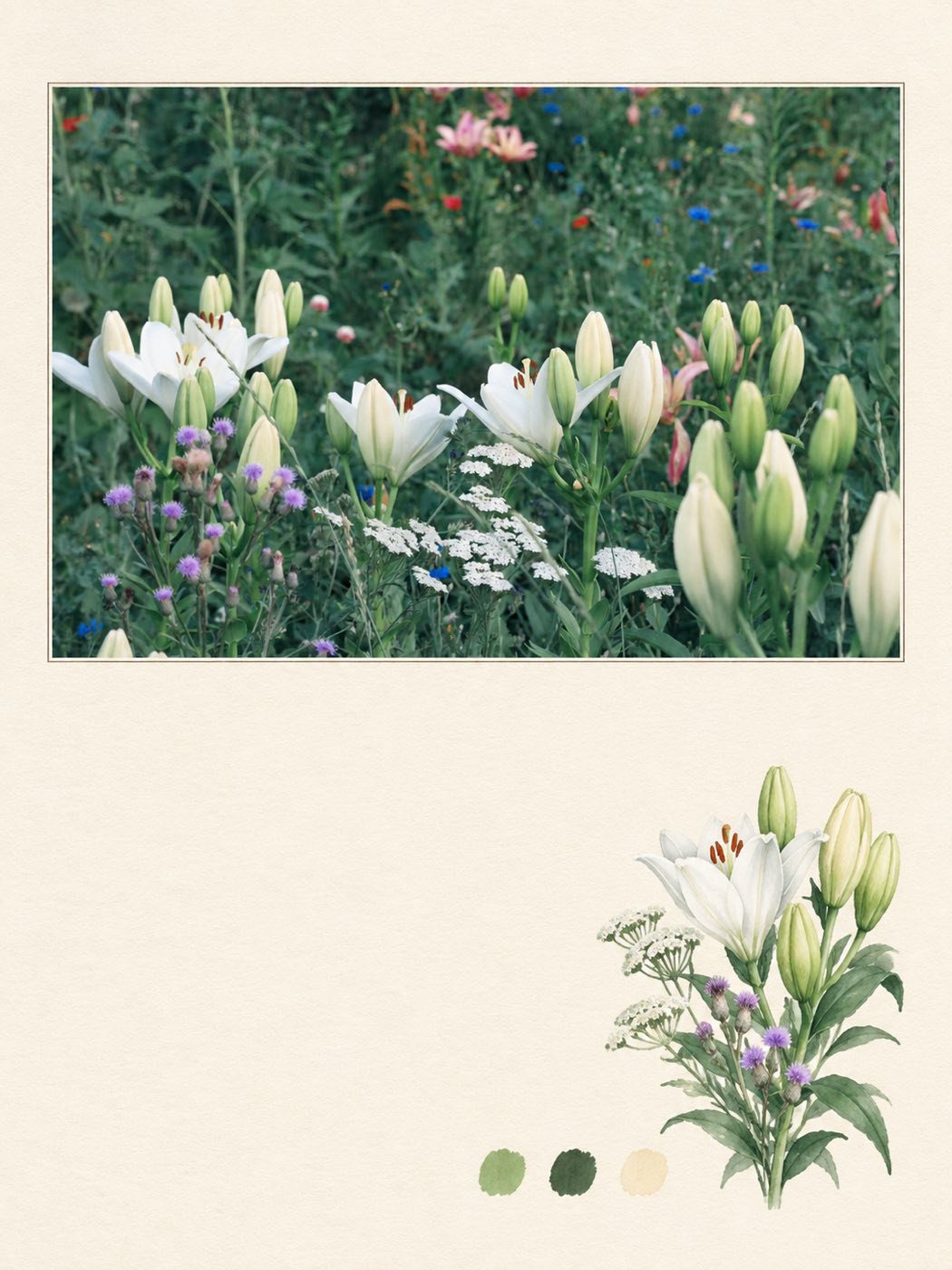
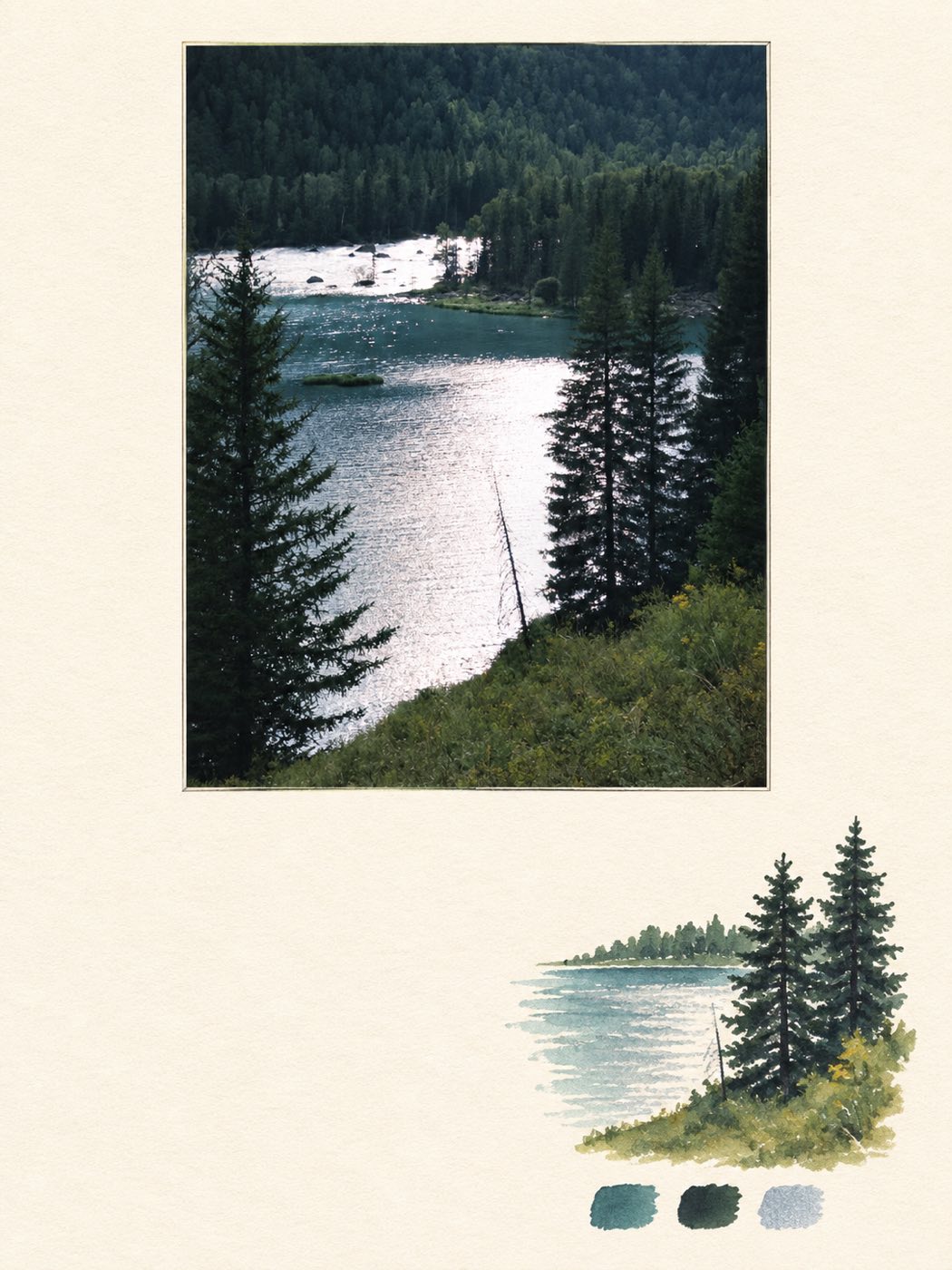
The original photograph remains the main record. Below it, a single drawn fragment remembers something particular: the edge of a lake, a cluster of plants, a window or a mountain ridge. Three small swatches carry the photograph’s palette into the paper. Nothing needs to become a calendar or a list of recommendations.
This is Whiplashzeb’s Photo to Zine Postcard, a separate workflow from the monthly postcard already in the collection. Its identifying structure is the complete photo, generous transition space, one substantial motif and a quiet metadata area. A portrait source is reduced enough to fit in the upper region instead of extending down beside the illustration. Wide output rearranges the two regions while keeping the photo intact.
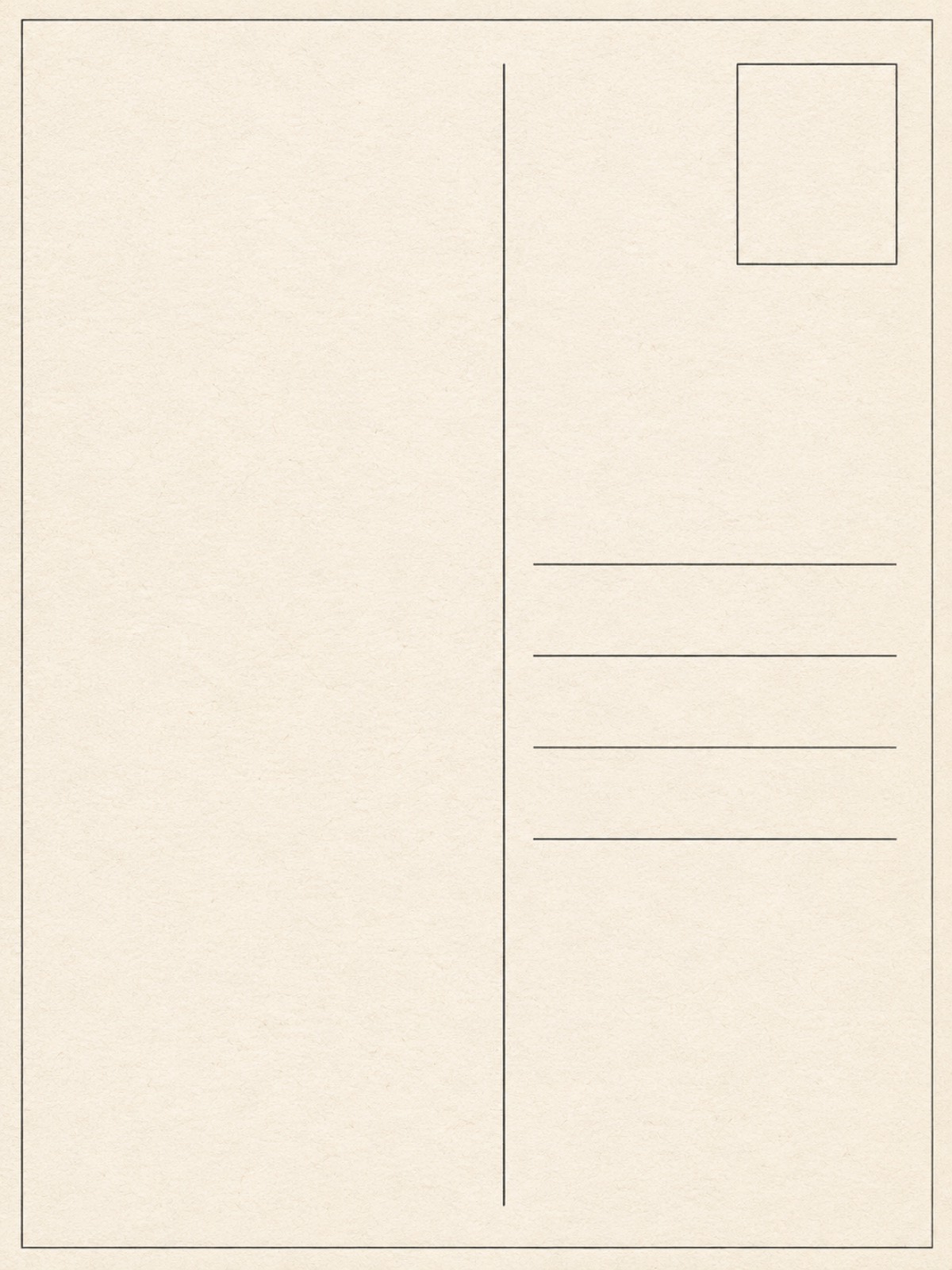
The source workflow produces a coordinated front and back. Our editor returns one image per generation, so the two faces are selectable separately. The back has a stamp box, a slightly offset divider, address lines and a generous blank message area. Front-caption text is ignored on the back. Choose the same ratio on each task when preparing a pair.
No location, date or recipient is guessed from the image. A caption is optional and stays short. The website uses its shared canvas choices rather than the upstream exact 2:3 print size; check dimensions, margins and alignment separately before printing.
What is in the prompt
- The whole photograph
- A thin frame holds the complete photo with its original proportions. On portrait cards it fits above a quiet transition band.
- One strong motif
- A distinctive colored shape from the source becomes a restrained watercolor, gouache or ink drawing, accompanied by three tiny sampled swatches.
- A writable back
- Choose Back to generate a separate plain face with a stamp box, divider, address lines and room for a message.
- Only your words
- The optional front caption is copied as supplied. Missing location, date and recipient details stay blank.
The full production prompt is built into generation and is not published.
Take the prompt with you
A distilled public version of this style. Paste it into any image model and swap {subject} for your own scene.
Create a minimal zine postcard front around a photograph of {subject}. Embed the complete original photo above with unchanged proportions, a fine frame and generous paper margins. Keep a clear blank transition below. Place one restrained hand-drawn source-specific motif in the lower right, a small empty metadata area in the lower left and exactly three tiny color swatches sampled from the photo. Use warm ivory paper, light grain and crisp watercolor or ink marks. Prefer the most distinctive colored shape rather than an arbitrary crop. Leave unknown details blank. No calendar, music pairing, decorative sample grid or invented location.
Example subject: a quiet lake surrounded by dark pine trees
Good for / not for
Works well
- Travel and landscape photographs
- Architectural details and plants
- A quiet front with a separate writable back
Not this one
- A monthly calendar with books and songs
- A two-image export from one generation
- Automatic print registration or exact postal dimensions
Common questions
Will one generation give me both sides?
Each generation returns one face. Choose Front or Back; use the same canvas ratio for both if you want a matching pair. Each is a separate generation.
How is this different from Monthly zine postcard?
This style uses one source motif, three swatches and optional metadata. It has no month, book quotation or song pairing, and offers a plain writable back.
Can I use the original 2:3 format?
The website currently offers its shared eight canvas choices, including 3:4 and 4:3. The upstream 2:3 print format is not an exact output option here.